
The player completed Red Dead Redemption 2 for the second time and realized that the first time they missed half of the game.

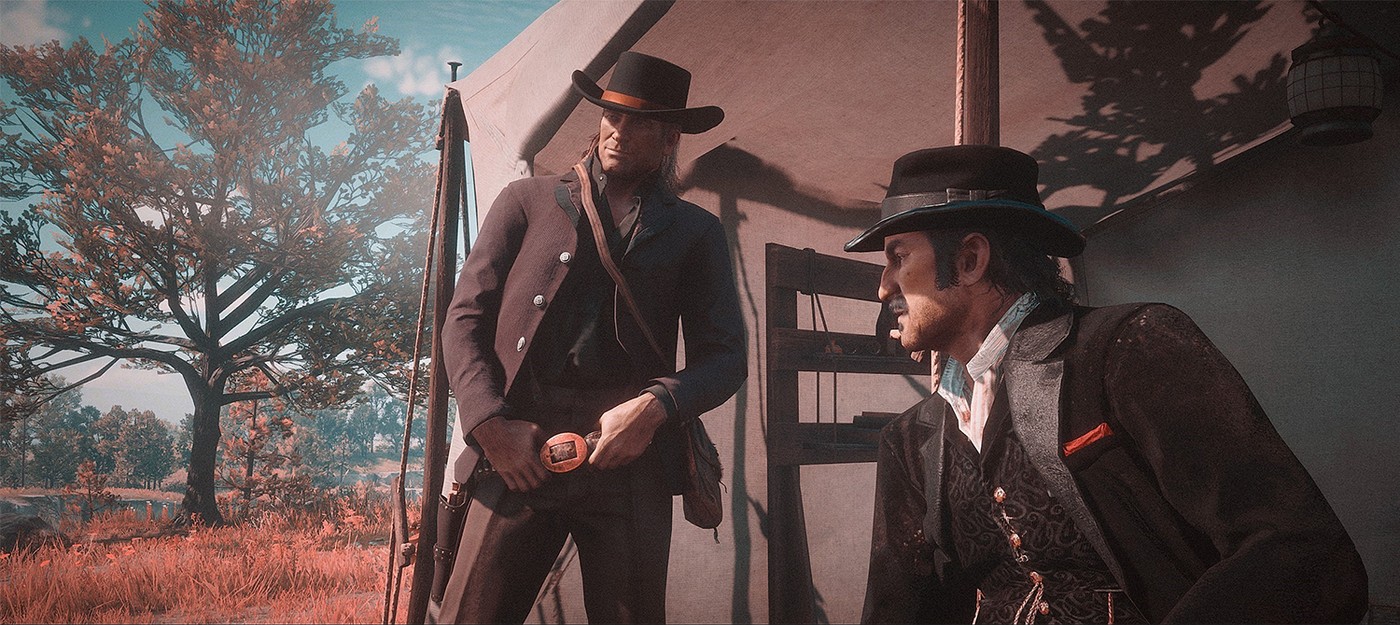
A user known as bushGiant posted about how his view of Red Dead Redemption 2 changed after a second playthrough years after his first.
The initial run was on a borrowed PS4 and rushed so he could return the console; he says he moved almost exclusively from mission to mission, only occasionally breaking off to hunt for equipment upgrades.
The later playthrough was on PC, taken casually—he loaded an old save, meant only to ride the map, collect herbs and listen to an audiobook, and to reacquaint himself with the world ahead of the release of GTA VI.
The save he chose dated to just after the snowy prologue: the gang’s camp near Valentine. That spot skipped the introduction and, in his view, was ideal for aimless wandering.
Within ten minutes of resuming, he encountered a random scene of two men arguing over a stolen safe; he paused his audiobook to pay attention.
I realized that there is an enormous amount of stuff happening around me that I completely ignored the first time. After a few hours, I barely did any story missions at all and kept finding things I had never seen before.
From that replay, bushGiant guessed he had missed roughly half of the game’s content on his first pass. He also came away understanding some common criticisms about Red Dead Redemption 2’s pacing: when a player moves strictly from story quest to story quest, the rhythm can feel slow, and players who are not already invested in the characters or setting may find little to engage them.
Much of the conversation around that observation returned to the snowy prologue, which many players call the main entry barrier. Estimates for how long the tutorial lasts vary: some say about half an hour, while others recall spending two to three hours in the mountains trudging through snowdrifts.
During that stretch the game introduces hand-to-hand combat, calming the horse, hunting and skinning, cooperating with partners in shootouts, and negotiating ledges and climbs.
A separate grievance targeted the on-screen prompts. Rockstar places instructions in a small font in the upper corner, and they often disappear before players can finish reading them—particularly in firefights. One commenter said they had missed the tutorial for the “Dead Eye” ability and spent half their first playthrough assuming the mechanic had been removed compared to the first game.
Some players proposed alternative starting points, such as beginning at the failed Blackwater robbery (an event only discussed in-game). Defenders of the existing prologue argue the robbery is intentionally left off-screen—different characters relay different versions of it, and the rumor that a woman was shot by Dutch is left ambiguous. Showing the event directly, supporters say, would have undercut Arthur’s gradual disillusionment with his leader.
Prologue advocates also contend the snow sequence showcases weather technology—tracks in the snow, melting on clothes, and the howl of the wind establish tone—and that the descent from the mountains into the valley provides a deliberate contrast. Critics reply that those technical and atmospheric feats don’t justify long stretches of slow walking from point A to point B while companions talk.
Players also traded lesser-known discoveries that even long-time viewers sometimes miss, including:
- Devil in the cave
- Missing Gavin, who is searched for across the map by his friend
- Mechanical man
- Vampire in Saint Denis
- Ghost train
- Werewolf
- Giant’s skeleton
- UFO
- Invisible giant who talks to Arthur
- Traveling zoo
A separate thread addressed hunting for perfect pelts. One player claimed the game reduces spawn rates for animals when the character has an active bounty for that species. Another respondent countered that conclusive evidence exists only for Red Dead Online and offered a technical explanation for perceived spawn changes in the single-player game: small carcasses and feathers are kept in the bag as inventory items, while a large carcass placed on the horse becomes a physical object the engine must track.
That object’s weight, collisions and decay are continuously calculated, which increases the number of dynamic objects the engine is already managing and can reduce nearby spawn variety—making the desired animal less likely to appear while the player carries another substantial load.
Other anecdotes highlighted how differently the game can play when not rushed. One gamer said their second run used no interface or map, navigating by the sun and verbal directions from companions during missions. Another described a hunting trip that lasted an in‑game month, after which a Valentine vendor reacted to Arthur’s smell.
At the opposite extreme, several players admitted they had reached Saint Denis only after about 140 hours—having spent most of that time hunting, fishing, gambling and running the camp—and lost momentum on the story. A few shared even more extreme cases: multiple attempts at playthroughs lasting 200–400 hours each, in which they still never reached the finale.