
Stellaris fans continue to fall into an economic trap when war suddenly drives them into debt.

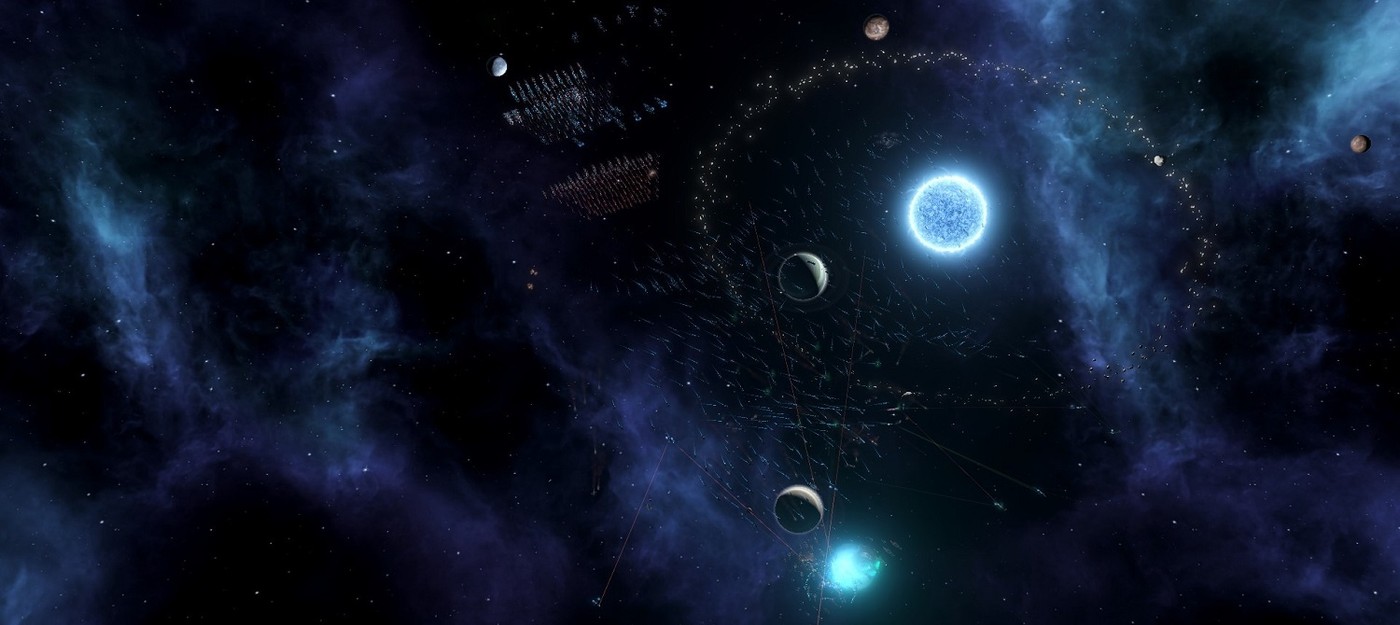
The economy in Stellaris is a sly thing. Everything looks fine while your fleet sits in dock; give the order to move and suddenly every resource readout feels like a crime scene. One screenshot — a sea of deep negatives across energy, minerals, volatile motes, rare crystals — sparked more shared groans than a patched warship, because the mistake isn't rare.
Usually the obvious offender is the starbase module "Military Logistics Office," the one that trims upkeep for docked ships by 25%. You build a fleet, the top bar smiles at you, and you declare war. Ships undock, the discount vanishes, and the ledger lurches downwards by hundreds of energy/mo. Add fleet capacity overlimit (e.g., 1400 vs. 1000 in the author's case) plus extra starbases beyond the soft cap, and penalties ramp up non-linearly — a small oversight becomes a huge bill.
Next, shortages bite. Strategic resources get chewed by production; when stockpiles hit zero, shortages apply nasty modifiers to stability, output, and pop growth. The knee-jerk fix is to buy on the galactic market, but purchases inflate prices and consume the very energy you lack. The result is a tightening loop: patching the hole often makes it bigger.
Escaping this mess rarely feels elegant; it’s more like triage:
- Accepting any white peace just to stop maintaining a war fleet on the march
- Turning off (not just downgrading, but disabling) buildings that consume exotic gases, volatile motes, and crystals
- Disbanding part of the fleet to get back within normal fleet limits and abandoning surplus starbases
- Switching part of the population to energy and food production, plus monthly market deals to balance out minor deficits
Avoidance beats cure. Veterans split into two camps: one runs periodic “fleet exercises” every ~10 yrs to see the true ledger without the docking discount; the other never fits the logistics module in the first place — pragmatic, blunt, and intentionally paranoid. The logic: if your economy collapses once the worst-case modifiers hit, you can't reliably operate it under pressure, so don't build around fragile tricks (i.e., design for the low point).
Also: storage matters. Small planets (under 13 tiles) make excellent resource warehouses; stockpiles that cover several years of conflict turn a potential disaster into an annoying detour.