
Monster Hunter Wilds today: how the game has changed before the release of the massive Ascendance expansion

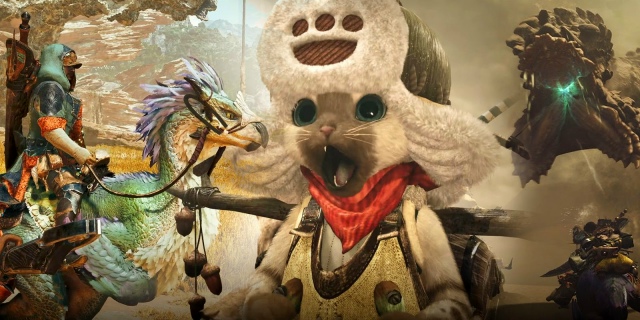
Monster Hunter Wilds Today: How the Game Has Changed Ahead of the Massive Ascendance Expansion
Thanks to a steady stream of updates, additions to the monster roster, and several technical overhauls, Monster Hunter Wilds is arriving at the release of the Ascendance expansion in a substantially different condition than at launch.
Nearly two years after its initial release, Capcom’s Monster Hunter Wilds remains a divisive entry in the series. Some players continue to praise the game, while others returned to Monster Hunter World or Monster Hunter Rise. Wilds launched with notable problems and never achieved widespread acclaim immediately, but a series of free updates and patches in the months since have shifted how the title plays and feels. Below, we look at the key changes to performance on PC, the expansion of endgame content and difficulty, the influx of new monsters, and the tools that let hunters push their builds further. What awaits newcomers and those who left early varies considerably from the original release.
Performance Issues Finally Resolved (Not Quite)
Performance was one of the most prominent criticisms at launch. On PC especially, players reported frequent frame drops, texture streaming and loading problems, excessive video memory use, and assorted graphical glitches; these complaints were common on Steam and contributed to a decline in positive user reviews. Capcom acknowledged the problems but early fixes were limited.
Title Update 2, released in the summer, improved shader compilation and added support for DLSS 4 and FSR 4. More substantial optimizations arrived later: Update 4, deployed on December 16, included over a hundred platform-wide optimizations that shifted heavy processing across multiple frames to lower instantaneous system load. Then a Steam patch on January 28, 2026 introduced a separate "Processor" tab in the settings and reworked the high-resolution texture pack, shrinking its size by 45 GB.
Those changes made a clear difference: Wilds runs noticeably better on PC and can be more comfortably played on less powerful rigs. Capcom even removed the built-in Steam performance test after Title Update 4, saying it no longer reflected the performance of the updated game. However, the fixes arrived after many players had already left; the game's Steam rating remains around 50%. In short, while the bulk of technical issues have been addressed, the poor first impression continues to affect perceptions.
But It’s Not All Perfect
Title Update 4.5 introduced VRAM usage limits that can affect visual fidelity. For example, on an 8 GB video card with the game set to "Ultra," some settings may be automatically lowered to high or medium to stay within the VRAM cap. Preserving higher texture and model detail therefore requires adjusting other settings to redistribute available video memory.
The game's VRAM management can also be inconsistent: even at maximum settings, Wilds does not always pick the higher-detail textures and meshes it should, occasionally loading lower-quality assets despite selected options. PC players have found workarounds: disabling HDR and using the Real Graphics Options mod can mitigate several display and quality issues by exposing more fine-grained graphic controls.
From a Small Bestiary to Serious Challenges
A major point of criticism at launch was the limited monster roster. While the creatures included were diverse, many hunters expected a larger bestiary and a more demanding main campaign. Capcom addressed that feedback, saying the initial game was intentionally more accessible than previous series entries.
Changes started as early as April 2025: the first major update added Mizutsune, and Zoh Shia was given full repeat-hunt status for players who reach hunter rank 50. Subsequent patches kept adding monsters — Lagiacrus returned with overhauled underwater combat, and Seregios made a comeback with its notorious bleed-inducing attacks. In September, a collaboration with Final Fantasy XIV introduced Omega, the series' first robotic monster; Omega's health pool is tuned for a full party of four hunters, and the encounter plays like an MMO raid transplanted into Monster Hunter, demanding considerable preparation and coordinated teamwork to succeed.
Alongside new faces, tougher variant encounters began to appear — apex versions ranging from Ray Dow to Arkveld — which drop materials for unique "Gamma" series gear and give players reasons to revisit familiar foes. The difficulty curve expanded as well: eight-star quests introduced stronger tempered monsters, nine-star missions added talismans with random abilities, and ten-star quests presented fresh challenges for highly prepared hunters. A marathon mode on the smallest map, requiring the consecutive defeat of four arch-tempered monsters, offered a notably harder endurance test compared with Wilds' softer launch-era experience. As a result, the updates gradually changed the perception of Monster Hunter Wilds.