
An unofficial version of Spider-Man: Edge of Time for PC has been released

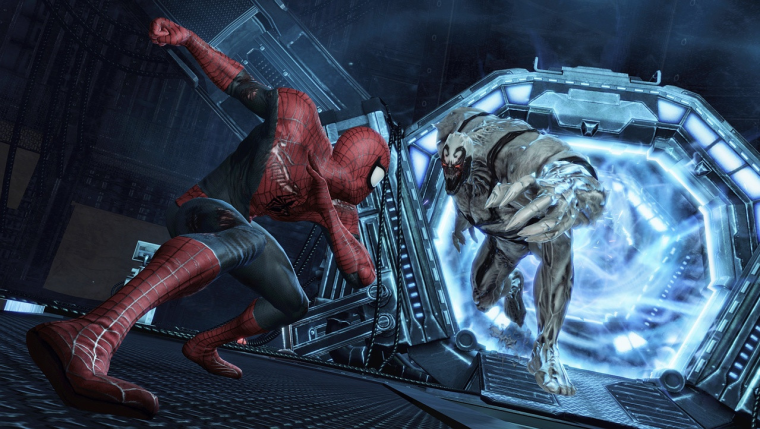
The public release of an unofficial native PC port of Spider-Man: Edge of Time has been published.
Originally developed by Canadian studio Beenox and published by Activision, Spider-Man: Edge of Time first arrived in 2011 on the Xbox 360, PlayStation 3, and Nintendo Wii consoles and never received an official Windows release. An enthusiast working under the pseudonym GenryTheFox has produced a build called Spider-Man: Edge of Time - PC Edition to bring the game — following the adventures of Peter Parker and Miguel O’Hara — to modern computers.
Rather than running inside an emulator, the port is the result of static recompilation of console code using the ReXGlue toolkit, together with years of community work from the Xenia emulator and the XenosRecomp project. The resulting executable runs natively under the DirectX 12 graphics API.
The release includes a separate launcher that exposes expanded graphics options: monitor selection, video card choice, vertical sync parameters, and removal of the frame rate limit up to 120 FPS. On the input side, the port implements full PC controls with WASD movement, adjustable camera sensitivity and the ability to remap any action to keyboard and mouse. The author also reworked interactive QTE sequences, adding dynamic on-screen hints that update when switching between an Xbox gamepad and keyboard controls.
This build adds a standalone local achievements system: 47 achievements totaling 1000 points tracked in the port’s own database, without requiring synchronization with external services such as Steam or Xbox Live.
The project is distributed in a manner intended to respect copyright law and does not include original game files. Users must supply their own legal copy of the Xbox 360 version — either an ISO image, an unpacked folder containing Default.xex files, or a GOD container. The installer included with the project extracts required resources, verifies checksums, applies binary patches, and assembles a ready-to-play game directory that no longer needs the original disk images after installation.
The V1 Beta build ships with original audio and text in five languages and features built-in Russian localization. The port author integrated Cyrillic fonts TEMPUS and SANSA, tweaking proportions and spacing to match the visual style of the original 2011 interface. Several graphical elements were restored as well, including glass transparency, neon lighting in futuristic areas, specific scanning effects, and colorful hit trails for characters.
Although the single-player campaign is reportedly playable from prologue to end credits, the beta exhibits technical problems. Reported issues include microfreezes during scene transitions, sudden performance drops even on high-end hardware, and critical rendering failures that produce white textures on integrated Intel graphics. The release also contains an experimental DLSS 5 enhancement package that leverages ReShade, Feeder, and NVIDIA technologies; this package is currently unstable.
The author has openly acknowledged extensive use of the OpenAI Codex and Astra neural networks while programming and resolving compilation issues, a disclosure that has generated some debate within the community.
Planned V2 work includes a deep overhaul of frame timing, fixes for audio stuttering on lower-end CPUs, an experimental Vulkan-based renderer, and a free-camera photo mode. The project team also said other console ports are being developed in parallel, including a PC adaptation of the arcade title Sonic Free Riders with complete removal of Kinect controller dependency.