
According to the study, the ability to independently commit bad deeds in games enhances immersion

Immoral Choices Made Freely Deepen Game Immersion, Study Finds
A study in the journal Acta Psychologica has found that a player's immersion in a game's story can be strengthened when they willingly commit an immoral act. The effect only occurs, however, when the decision is made independently rather than forced by the game.
Yilin Li of Shaanxi Normal University and Yuen Kuan Jun of Hong Kong Baptist University examined how the morality of in-game decisions influences narrative engagement. Their study published drew on 320 gamers from China, aged 18 to 39, consisting of 174 men and 146 women who play roughly six hours per week on average.
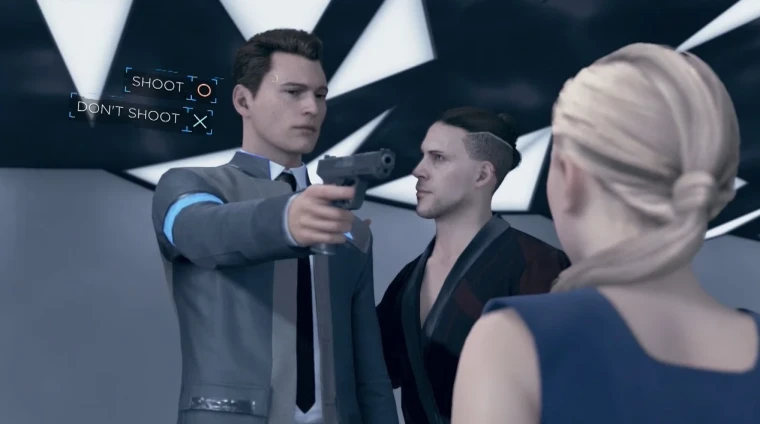
Participants watched scenes from two titles: Detroit: Become Human and BioShock. The first presented a choice between shooting the android Chloe to obtain information—an immoral act—or refusing, the moral option. The second posed a similar dilemma: saving or killing the Little Sisters.
The subjects were split into two groups. Those in group A made the decision themselves within five seconds and then viewed the matching ending. In group B, the system chose for them, and they saw a randomly assigned outcome. Afterwards, every participant answered questions about guilt, shame, and pride, followed by questions about their level of immersion in the story.
Group A participants who chose the immoral act reported greater immersion, averaging 3.83 points, than those who acted morally at 3.43 points. The pattern reversed in group B, where moral actions by the character scored 3.14 points and immoral ones just 2.39 points.
According to the researchers, making a decision personally creates a stronger sense of responsibility. An immoral choice produces a moral conflict, along with guilt and tension, which heightens attention to events and deepens immersion.
The scientists intend to broaden their sample to include gamers from different cultures and age groups. They also plan to test whether the effect holds during long playthroughs rather than only while watching short scenes.