
13 minutes of The Witcher 3: Songs of the Past expansion and new details about the Letten region

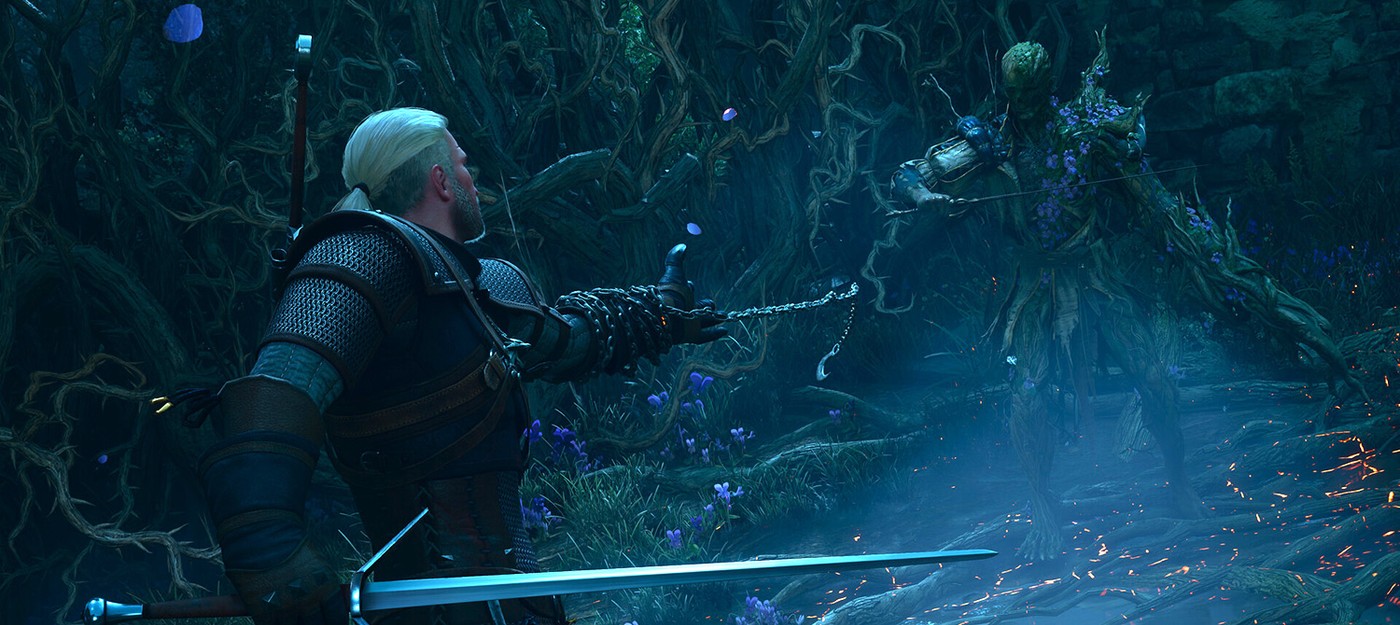
CD Projekt Red and Fool's Theory ran several Gamescom 2026 streams and showed roughly 13 minutes of gameplay from the third expansion for The Witcher 3: Wild Hunt. Titled Songs of the Past, it’s slated for 2027 on PC, PS5, Xbox Series, and Nintendo Switch 2. The sequence opens the morning after Belleteyn — Geralt wakes with a hangover at Lettenhof manor, where an old friend put him up. Dandelion is gone, and so is his lute; a troubling dream nudges Geralt toward the idea that this isn’t just the aftershock of a festival. The devs placed the events after Geralt’s plan to retire to Corvo Bianco — he had barely started packing when another case dropped into his lap.
https://www.youtube.com/watch?v=hALV38S8RTY
The new area is Letten, part of Dandelion’s family estate — the bard’s full name being Julian Alfred Pankratz, Viscount de Lettenhof (i.e., the noble line behind the manor). On stream, the team sketched the layout like this:
Reach the bay of Praxene, go up the Buina to the east, then pass through Nimnar, and on the southern shore, you will find this wonderful place. Letten is located in the north, between Kaedwen and Kovir.
A morning meal at the manor devolves into argument. Geralt ends up referee as Dandelion’s grandmother insists the bard hasn’t vanished, while cousin Lilla ties the disappearance to details from Geralt’s dream — the Garden of Thorns, and an old scandal involving a mad count, Humbert de Lettenhof. The curse looms in family gossip and in Lilla’s accusations.
Visually, Letten grew out of two, almost contradictory impulses. One is the soft, sunlit memory of holidays at grandma’s house; mornings that smell of bread and damp grass. The other borrows architectural cues from the British Isles instead of the series’ usual Slavic frame. It feels cozy and slightly uncanny at once.
The designers started with mundane math — population counts, village numbers, brewery capacity, how many horses are kept, how many sheep feed the valley and leave a surplus for trade. From those small, practical choices came the settlements’ scale, quest hooks, and even dialogue. Clothing motifs were treated the same way: embroidery echoes hops, bracken, horses — things locals actually work with. You’ll even spot hop cones carved into furniture, e.g., behind a heroine’s chair.
Sunlit fields meet shadowed woods, and that edge was apparently the toughest problem. The team fixed it with framing, changes in building density, careful placement of encounters, and a slow bleed of shapes and palettes between biomes. The guiding idea was to nudge players gently — not shove them down a path, but not leave the map a random scatter either.
Two new monster types appeared in the demo. One is an archspore variant, born in the Garden of Thorns, with different attack rhythms and fresh VFX. The other is called Swarmians — from “swarm” — and they swarm: numbers, chaos, pressure. The teaser shows Geralt with a new chained weapon that drags foes close; one cinematic moment ends with a decisive decapitation. Doug Cockle is back on voice duty for the witcher. Beyond Letten, there’s Nettel, a mirrored reflection of the region, plus some new, unique mutagens to tinker with.
At the same time the studio confirmed The Witcher 3: Wild Hunt – Remastered. The remaster improvements are visible in the shown footage, especially in updated visual effects. Today, everyone who already owns The Witcher 3 received Hearts of Stone and Blood and Wine for free. CD Projekt RED also stressed their terminology: DLC = small, free add-ons (e.g., extra outfits), while expansions are larger, with new stories and characters and many hours of content.