
10 underwater levels that became a real challenge for gamers

10 Underwater Levels That Became a Real Challenge for Gamers
When the heat makes a swim sound irresistible, many gamers have very different associations with water: instead of refreshment there are memories of suffocating corridors, sluggish controls, and the relentless beep of an oxygen meter. Underwater stages frequently change the rules of movement, restrict maneuverability, and introduce an extra resource to monitor — air — turning otherwise straightforward sections into endurance tests. Some of those levels have become notorious classics for their frustrating mechanics or peculiar design choices. Below are several of the most memorable examples whose damp corridors and murky depths still haunt players’ recollections.
Super Mario 64
Super Mario 64’s underwater content centers on two landmarks: Jolly Roger Bay and Dire, Dire Docks. Nintendo’s swimming model was impressively convincing for its era, yet that fidelity didn’t mean ease. Many star objectives require tight control — sprinting through timed sections, threading rings of bubbles, and continually watching Mario’s oxygen. For countless players, however, the most lasting trauma from Jolly Roger Bay wasn’t a tricky star at all but Unagi, the giant eel that lurks inside the wreck. The creature suddenly emerging from darkness with wide eyes made confronting it feel, in childhood memories, more terrifying than facing Bowser, so much so that many remember these underwater episodes primarily for that encounter rather than for the actual objectives.
Kingdom Hearts: When Atlantica Became a Challenge
The Atlantica world in the original Kingdom Hearts promised a crossover with The Little Mermaid but was hampered by clumsy underwater controls that impaired combat and made navigation across the ocean floor uncertain. Square Enix took a bolder turn in Kingdom Hearts II, largely abandoning the standard combat and recasting Atlantica as an extended rhythm sequence. That change of pace felt out of step with the rest of the game, and attaining 100% completion there became more a trial of patience than entertainment for many players. Musically, the area is dominated by the inevitable “Under the Sea,” and among the cast Atlantica left behind a memorable oddity: Ducky-Duck — a grotesque, octopus-like creature whose design some players compare to Lovecraftian horror rather than a Disney sidekick.
Monster Hunter 3: Too Much Hunting Underwater
Monster Hunter Tri introduced fully 3D underwater combat to the franchise, allowing hunters to move in all directions beneath the waves. In practice, however, slow player movement and an awkward camera made many encounters feel like a battle with the controls rather than with the monsters. Positioning a hunter or keeping a leviathan in view often demanded more effort than the hunt itself. The monsters were not always the issue — the majestic Lagiacrus proved popular enough to return in later entries — but the developers ultimately removed regular underwater battles after Tri, a decision that seemed to suit most of the community.
Tomb Raider 2: Sunken Ship and Running Out of Air
Tomb Raider II’s “40 Fathoms” thrust Lara Croft into the open sea and then into the cramped, flooded corridors of the sunken liner Maria Doria. The level leans heavily on atmosphere: vast, featureless ocean stretches give way to winding, dark interior spaces while oxygen drains steadily, leaving little room for mistakes. A single pause can be fatal and force a reload. Sharks patrol the waters and can only be driven off with a harpoon gun, compounding the tension. The combination of tight spaces, limited air, and predators makes the Maria Doria less about exploration and more about survival and escape.
Devil May Cry: When Dante Had to Leave His Sword on Shore
Devil May Cry is celebrated for Dante’s rapid, stylish combat with swords and pistols, so the series’ underwater detour on the “Ghost Ship” stands out as an odd, often-unloved chapter. The game shifts into first-person view for the segment, strips away most of Dante’s arsenal, and leaves the player with only a harpoon gun. Against the backdrop of the franchise’s usual frenetic battles, this episode feels slow and clumsy, interrupting the established rhythm and leaving the sequence rarely recalled with fondness.
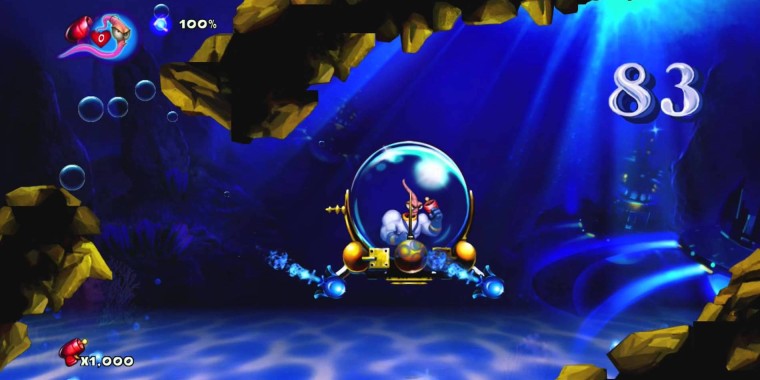
Earthworm Jim: When Even the Worm Had to Fear Water
In the original Earthworm Jim, the level “Down the Tubes” surprised players who expected the series’ trademark humor and jump-and-shoot action. Instead, the stage departed from the usual platforming formula and became one of the more unpleasant surprises in the game’s lineup.